East- or West-Facing Roof: Is Solar Still Worth It?
East- or west-facing solar panels made about 14.5% to 14.8% less power than south-facing ones across U.S. states. See where the loss is biggest and smallest.
Published 6 min readRoofPayback editorialChecked by automated fact and quality checks
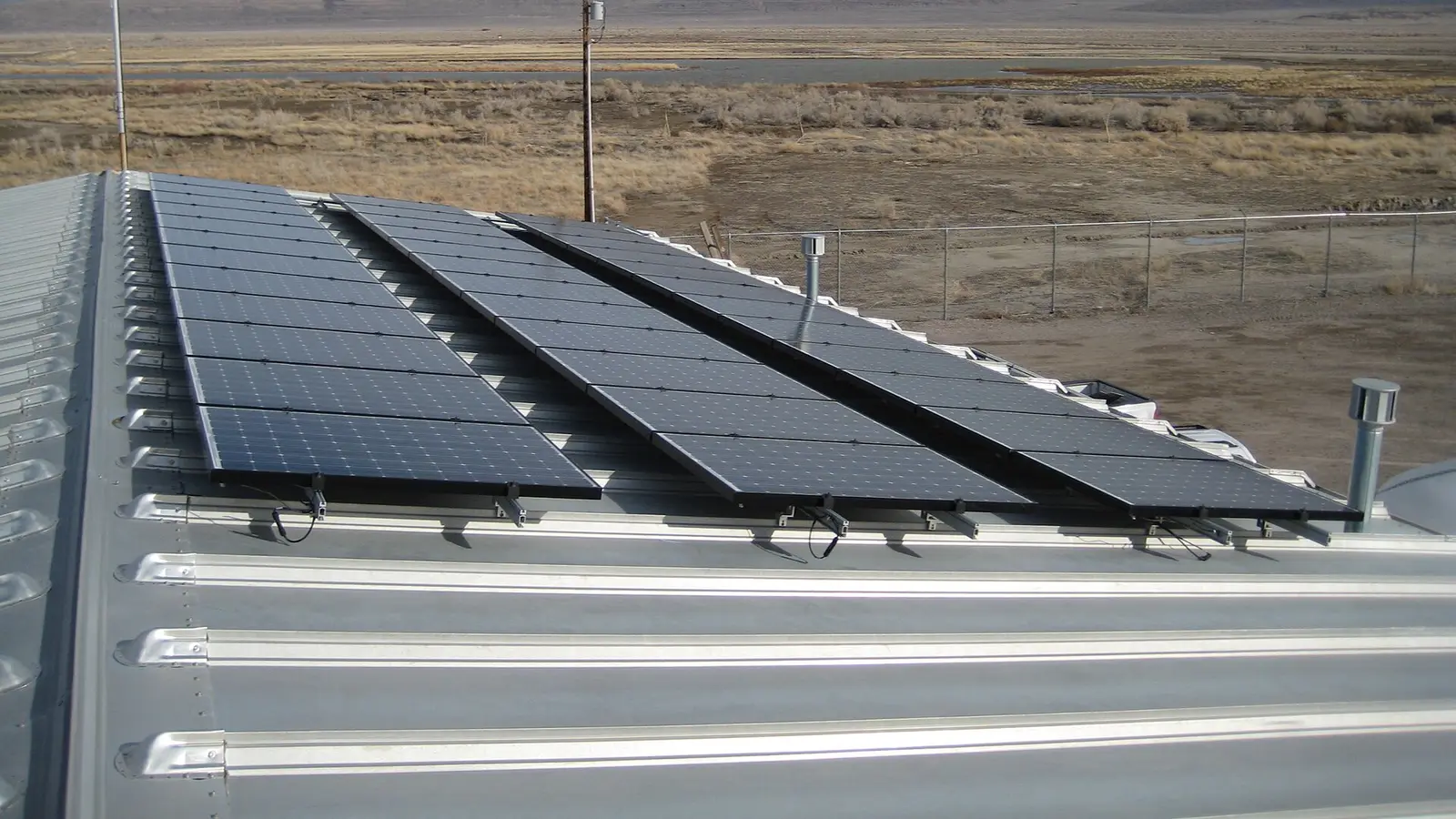
Short answer
Yes, an east- or west-facing roof can still be a good place for solar panels. You just get less electricity than you would from the same panels facing south. In our state-by-state model, panels facing east or west at a 20° pitch made about 14.5% to 14.8% less electricity per year than south-facing panels at 20°, on average across states.
That loss is real but not fatal. Whether the system still pays off depends a lot on your electricity price, your utility's rules for extra power, and the price you are quoted. Lower output simply stretches the payback period.
The U.S. Department of Energy puts it plainly: "Typically, solar panels perform best on south-facing roofs with a slope between 15 and 40 degrees, though other roofs may be suitable too."
How we measured the loss
We used PVWatts v8, a free solar production estimator from the U.S. Department of Energy's National Laboratory of the Rockies (formerly NREL). For each state we picked one reference city. The baseline is a south-facing system at a 20° pitch with 14% system losses. Then we changed only the direction the panels face, or the pitch, and compared yearly output.
A few terms first:
- Orientation (or azimuth) is the compass direction the panels face.
- Pitch (or tilt) is the roof angle, measured in degrees from flat.
- kWh (kilowatt-hour) is the unit on your electric bill. Less output means fewer kWh you avoid buying from the utility.
Our figures are averages across states. Your own roof will differ, so treat them as a guide, not a quote. You can see the full approach on our methodology page.
Output by roof direction and pitch
Here is how each roof setup compares with south-facing panels at 20°. A negative number means less electricity per year.
| Roof setup | Average across states | Best state | Worst state |
|---|---|---|---|
| South, 30° pitch | +2.4% | +4.7% (Alaska) | -1.7% (Hawaii) |
| Southeast, 20° | -4.1% | -1.8% (Florida) | -7.2% (Alaska) |
| Southwest, 20° | -4.3% | -2.2% (Hawaii) | -5.9% (Montana) |
| East, 20° | -14.5% | -7.2% (Hawaii) | -20.7% (Alaska) |
| West, 20° | -14.8% | -7.6% (Hawaii) | -18.7% (Montana) |
| East + west split, 20° | -14.7% | -7.4% (Hawaii) | -18% (Alaska) |
| East, 30° | -17.2% | -11.1% (Hawaii) | -23.3% (Alaska) |
| West, 30° | -17.7% | -11.6% (Hawaii) | -21.4% (Montana) |
Three things stand out:
- Southeast and southwest are close to south. On average they lose 4.1% and 4.3%. For most homes that is a small difference.
- East and west lose more, but they keep most of their output. The average loss is 14.5% for east and 14.8% for west at a 20° pitch. Splitting panels across both sides lands in between, at 14.7%.
- A steeper pitch hurts east and west roofs. At a 30° pitch, the average loss grows to 17.2% (east) and 17.7% (west). For south-facing panels, the steeper pitch helped slightly on average (+2.4%).
Where orientation matters most and least
Location changes the picture a lot. The Department of Energy notes: "To obtain the highest annual energy output, modules in the northern hemisphere are pointed due south and inclined at an angle equal to the local latitude." So the same roof angle behaves differently in different states.
| State | What happened in our model |
|---|---|
| Hawaii | Smallest losses for east (-7.2%), west (-7.6%) and east-west split (-7.4%) roofs |
| Florida | Smallest loss for southeast roofs (-1.8%) |
| Alaska | Largest losses for east (-20.7% at 20°, -23.3% at 30°) and east-west split (-18%) roofs |
| Montana | Largest losses for west (-18.7% at 20°, -21.4% at 30°) and southwest (-5.9%) roofs |
In Hawaii, an east- or west-facing roof keeps most of its output. In Alaska and Montana, the gap between a south roof and an east or west roof is much wider. Most states fall somewhere between these ends.
Hawaii is also the one state in our model where a steeper south roof did worse than our baseline (-1.7%), while Alaska gained the most from it (+4.7%).
What lower output means for your savings
Less output means fewer kWh to offset your bill. But the Department of Energy lists several things that drive savings, not just direction: "The amount of money you can save with solar depends upon how much electricity you consume, the size of your solar energy system, if you choose to buy or lease your system, and how much power it is able to generate given the direction your roof faces and how much sunlight hits it."
In practice, three factors often matter as much as the roof:
- Your electricity price. Your rate is the price you pay per kWh. A higher rate makes every kWh your panels produce worth more. Check your state on our electricity prices page. The U.S. EIA publishes average residential prices by state each month, and recent months are preliminary.
- Your utility's export rules. Net metering is a billing arrangement that credits you for solar power you send back to the grid. Rules differ: "Whether or not your solar system qualifies for net metering payments depends on policies and practices in your state and electric utility." Our guide on net metering vs. net billing explains why this matters.
- Incentives. The 30% federal Residential Clean Energy Credit (Section 25D) is not available for property placed in service after December 31, 2025. State and utility programs vary, and the DSIRE database lists current ones. See is solar worth it without the tax credit.
Our state pages use an example home to show payback. Its key assumptions: a 7 kW system, 10500 kWh/yr of use, 40% of that use while the sun is up, an installed cost of $3000/kW ($21000 total), no incentives, $100/yr maintenance, electricity prices rising 2.5%/yr, panels losing 0.5%/yr, a 25-year horizon, and export credits capped at a year of grid purchases. Those pages model a south-facing roof at 20°, so an east or west roof would produce less than shown there.
Tips if your roof faces east or west
- Ask for a production estimate for your actual roof. A quote should model your real direction, pitch and shade, not a generic south roof.
- Compare quotes on expected yearly kWh, not just total price. Two systems of the same size can produce different amounts on different roofs.
- Consider using both sides. An east-west split lost about the same as one side alone in our model (-14.7% on average), which can help if one side is too small.
- Watch for shade. The Department of Energy notes that if nearby trees create excessive shade on your roof, rooftop panels may not be the most ideal option.
- Size the system to your use. Our guide on how many solar panels you need walks through the math.
- Run your own numbers in our solar calculator.
Bottom line
An east- or west-facing roof usually means less solar output, not no solar output. Across states, our model showed about 14.5% to 14.8% less per year at a 20° pitch, with smaller losses in Hawaii and larger ones in Alaska and Montana. Southeast and southwest roofs lose much less. Whether panels are worth it on your roof depends on your electricity price, your utility's export rules and your quote, so get an estimate for your specific roof before you decide.
Sources
Get new articles by email
New articles and the monthly electricity price update. Unsubscribe anytime.
See our privacy policy.