What Is a Kilowatt-Hour and How Much Does One Cost?
A kilowatt-hour (kWh) is how utilities measure the electricity you use. Learn what it means in plain words and what a kWh costs in each U.S. state.
Published 6 min readRoofPayback editorialChecked by automated fact and quality checks
Short answer
A kilowatt-hour (kWh) is the unit your electric utility uses to measure how much electricity you use. One kWh is one kilowatt of power used for one hour. In July 2026, the average residential price ranged from 12.72¢ per kWh in Louisiana to 48¢ per kWh in Hawaii, according to the U.S. Energy Information Administration (EIA).
So the honest answer to "how much does a kWh cost?" is: it depends a lot on where you live, and on your utility's rate plan. The rest of this guide explains the unit in plain words and shows what it costs in different states.
Watts, kilowatts and kilowatt-hours
These three terms sound alike, but they measure different things.
- Watt (W): a unit of power. It tells you how much electricity a device draws at a given moment.
- Kilowatt (kW): a bigger unit of power. The EIA explains that "One kilowatt is equal to 1,000 Watts."
- Kilowatt-hour (kWh): a unit of energy. It measures how much electricity you used over a period of time.
Think of it like a car. Watts are like your speed. Kilowatt-hours are like the miles you actually drove. Your bill charges you for the miles, not the speed.
The EIA puts it this way: "One kWh is one kilowatt generated for one hour. For example, if you use a 40-Watt (0.04 kW) light bulb for five hours, you have used 200 Wh, or 0.2 kWh, of electrical energy."
In other words, a small device left on for a long time can use as much energy as a big device used for a short time. What matters for your bill is power multiplied by time.
How your utility counts your kWh
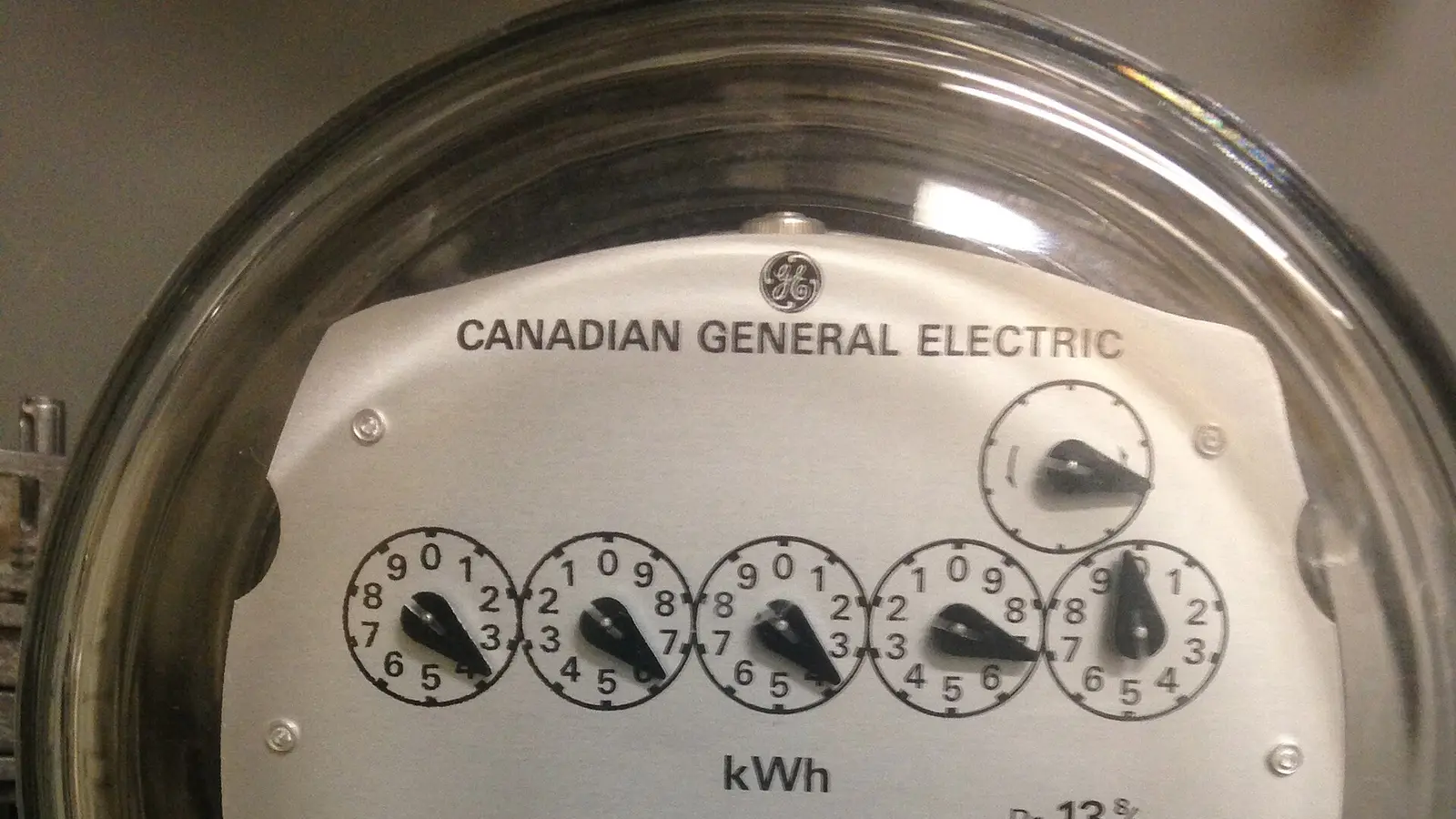
Your electric meter keeps a running count of the kWh your home uses. In the EIA's words, "Electric utility companies use meters to measure how much electricity their customers use." Older meters were read by hand. Many utilities now use smart meters that send usage data automatically.
Each billing period, the utility looks at how many kWh you used and multiplies that by your rate. A rate is the price per kWh set by your utility. According to the EIA, "Most consumers pay prices based on the seasonal average cost of providing electricity," and "Some utilities offer their customers time-of-day pricing to encourage electricity conservation and to reduce peak demand for electricity."
How much does a typical home use? The EIA reports that in 2022, "the average annual amount of electricity sold to (purchased by) a U.S. residential electric-utility customer was 10,791 kilowatthours (kWh), an average of about 899 kWh per month." Your own use could be much higher or lower. It depends on home size, climate, heating and cooling, and whether you charge an electric car at home.
The easiest way to find your own number is to check your electric bill or ask your utility.
What a kWh costs by state
The table below shows the EIA average residential price for July 2026 in a sample of states. It also shows an example monthly energy cost, assuming a home uses 900 kWh in a month at that state's average price. EIA's average already includes taxes and fees spread across all kWh sold; your own bill depends on your utility's fixed fees, rates and plan.
| State | Price per kWh (July 2026) | A year earlier | Example cost of 900 kWh |
|---|---|---|---|
| Hawaii | 48¢ | 39.36¢ | ≈ $432 per month |
| California | 33.61¢ | 32.66¢ | ≈ $302 per month |
| Maine | 32.41¢ | 27.98¢ | ≈ $292 per month |
| Massachusetts | 30.49¢ | 30.07¢ | ≈ $274 per month |
| New York | 29.9¢ | 26.22¢ | ≈ $269 per month |
| Illinois | 19.22¢ | 17.22¢ | ≈ $173 per month |
| Texas | 15.88¢ | 15.36¢ | ≈ $143 per month |
| Arizona | 15.38¢ | 15.34¢ | ≈ $138 per month |
| Florida | 15.03¢ | 15.11¢ | ≈ $135 per month |
| Utah | 13.12¢ | 13.45¢ | ≈ $118 per month |
| Nevada | 12.77¢ | 12.39¢ | ≈ $115 per month |
| Louisiana | 12.72¢ | 13.12¢ | ≈ $114 per month |
A few things stand out. Prices in Hawaii, California and much of New England are far higher than in much of the South and Mountain West. Prices also move from year to year. Hawaii's price was up 22% from a year earlier, while Connecticut's was down 12.5%.
For every state, see our electricity prices by state page, or read the full July 2026 electricity price update. You can also jump straight to a state, such as California, Texas or Florida.
Why the price of a kWh is different everywhere
The EIA explains that "Electricity prices generally reflect the cost to build, finance, maintain, and operate power plants and the electricity grid." Fuel costs, the cost of power lines, weather and state regulation all play a part. In some states, utility commissions fully regulate prices. Other states mix unregulated and regulated prices.
Prices can also change with the season. According to the EIA, "Prices are usually highest in the summer when total demand is high because more expensive generation sources are added to meet the increased demand."
Keep in mind that the state figures above are averages. Your own price per kWh could be higher or lower. To get a rough idea, divide the energy charges on your bill by the kWh you used, or check your utility's published rate schedule. The EIA publishes these state averages each month, and the most recent months are preliminary, so they can be revised.
Why kWh matters if you are thinking about solar
Solar is measured with the same units. A solar system's size is usually given in kilowatts (its power rating). What it produces over a year is counted in kWh.
Every kWh your panels produce and you use at home is a kWh you do not buy from the utility. So the higher your price per kWh, the more each solar kWh you use yourself is worth to you.
But the value of extra kWh you send to the grid depends on your utility's rules. Under net metering, exported kWh earn a credit on your bill. Under net billing, exports may be credited at a different rate. Net metering and solar incentive programs vary by state and utility, and DSIRE keeps a database of current programs. Our guide on net metering vs. net billing explains the difference.
Also note that, according to the IRS, the 30% federal Residential Clean Energy Credit is not available for property placed in service after December 31, 2025. Our guide on whether solar is worth it without the tax credit looks at that question.
To see how your own kWh use and local price affect the math, try the solar calculator. It uses PVWatts, a free production estimator from the U.S. Department of Energy's National Laboratory of the Rockies (formerly NREL). Our methodology page explains the assumptions behind our numbers.
Bottom line
A kilowatt-hour is simply one kilowatt of power used for one hour, and it is what your utility bills you for. In July 2026, the EIA average residential price ranged from 12.72¢ per kWh in Louisiana to 48¢ per kWh in Hawaii. To know what a kWh really costs you, check your own bill, since fixed fees and rate plans vary by utility. If you are weighing solar, your price per kWh is one of the most important numbers in the decision.
Sources
- 1.EIA FAQ: electricity sales and price data
- 2.PVWatts Calculator
- 3.EIA Electric Power Monthly, Table 5.6.A
- 4.eia.gov/energyexplained/electricity/measuring-electricity.php
- 5.eia.gov/tools/faqs/faq.php
- 6.eia.gov/energyexplained/electricity/prices-and-factors-affecting-prices.php
- 7.IRS: Residential Clean Energy Credit
- 8.DSIRE: Database of State Incentives for Renewables & Efficiency
Get new articles by email
New articles and the monthly electricity price update. Unsubscribe anytime.
See our privacy policy.